How to make your conference booth stand out
Give buyers a reason to stop at your booth, and to remember it.
What you’ll learn
- Why most booths get walked past
- How one question on a screen draws a crowd
- How to turn the answers into better follow-up
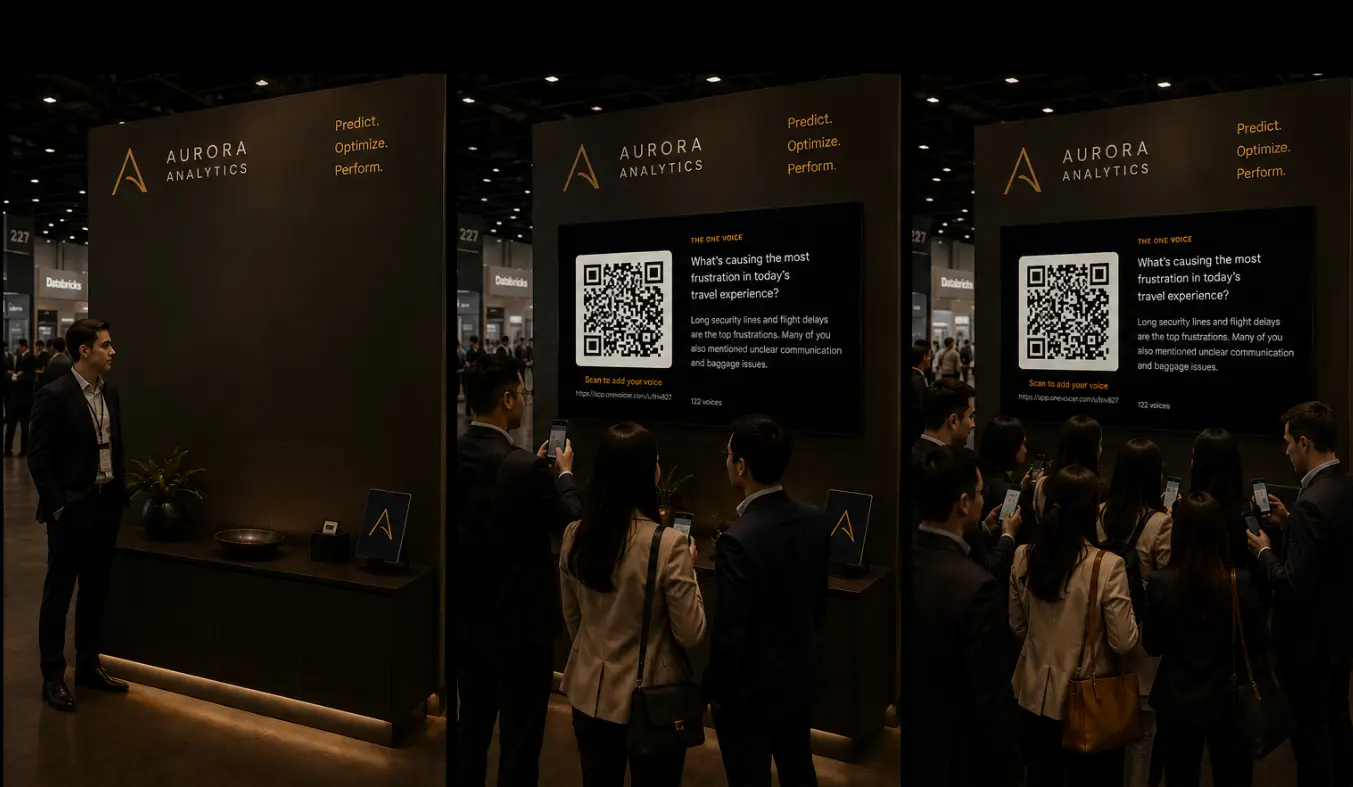
Walk a major trade show at ten in the morning and you can feel which booths are working. A few have a knot of people around them. Most have a couple of reps in matching shirts, waiting. The floor itself is enormous and expensive: the US business-to-business exhibition industry generated 161 billion dollars in business sales in 2023 and added 90 billion dollars to GDP, according to the Center for Exhibition Industry Research. A single booth is often the biggest line in a company’s marketing budget for the year.
The people walking past are not the problem. A trade show audience is about as qualified as a room gets: CEIR has found that roughly 94% of attendees have a say in what their company buys, and they come to discover and compare, not to be sold to. The problem is almost always the booth itself. This guide is about closing the gap between an expensive space and a memorable one: why most booths blur together, what the research says actually makes people stop and remember you, and how to set it up without a six-figure build.
# The floor is full of buyers. Most booths waste them.
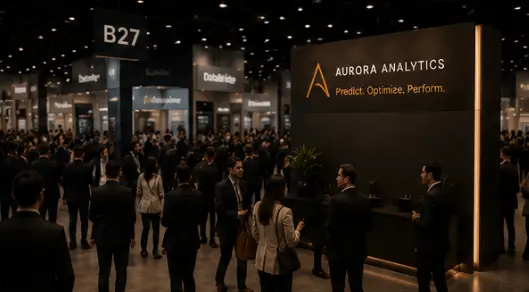
Start with the good news, because it is genuinely good. The audience walking your aisle is not a random crowd. They paid to be there, traveled to be there, and most of them influence real purchasing. When CEIR looked at why people attend, it found that across every level of management they come to shop and to learn, rating both above buying on the spot. In other words, they arrive curious and in evaluation mode, which is exactly the moment a vendor would want them.
Now the bad news. Most booths do nothing with that. The expensive space becomes a backdrop for staff who wait to be approached: a banner, a table, a bowl of branded mints, maybe a looping video nobody watches. Nothing in that setup asks anything of the person walking by, so nothing happens. They glance, they keep moving, and a year of budget quietly converts into foot traffic that never slowed down.
# The real problem is the experience gap
There is a useful number for why booths blur together. Freeman’s 2025 Trends Report found that only 40% of attendees recall experiencing a genuine peak moment at an event, while 78% of organizers believe they deliver one. That gap, between how memorable exhibitors think they are and how memorable they actually are, is the whole game. Most of the floor is forgettable, including the booths that were sure they would not be.
That same research found the moments that do land are worth chasing: attendees who experience a peak moment are 85% more likely to return. The encouraging part for a smaller exhibitor is that the bar is lower than it looks. You are not competing with every booth at being loud. You are competing to be one of the few that creates a single moment worth remembering, and most of your neighbors are not even trying.
# People come to do, not to be pitched
If attendees come to discover and evaluate, the booths that work let them do exactly that. Freeman’s 2025 report found that 61% of attendees define an immersive experience as hands-on product interaction. Not a demo they watch, not a brochure they pocket, but something they get to touch, try, or take part in. The verb matters: people remember what they did far more than what they were told.
This reframes what a booth is for. A booth is not a billboard you stand next to, broadcasting at the aisle. It is a place where something is happening that a passerby can step into. The shift from “look at us” to “try this” is small to describe and surprisingly rare to see on a show floor, which is precisely why it stands out.
# Participation is what moves buyers
Getting people to take part is not just about being liked. It tracks with pipeline. The EventTrack studies of experiential marketing have found that trying a product is the single biggest driver of whether someone becomes more inclined to buy, ahead of price or features, and that a majority of consumers say participating in an event makes them more inclined to purchase the brand afterward.
The effect shows up in actual sales, not just sentiment. EventTrack’s 2018 study found that among people who try a product or service at an event, 43% buy it on-site and another 30% buy within four weeks. You will not replicate consumer-event numbers at a B2B booth, but the direction is clear and consistent across years of this research: the people who do something at your booth are the ones who carry it forward. Participation is the mechanism, not the decoration.
# Lead with a question, not a pitch
The simplest way to turn a passive booth into a participatory one needs no hardware at all: ask a good question. A pitch makes people defensive and they walk faster. A real question about their world makes them stop, because it is about them, and because most people enjoy giving an opinion far more than receiving one. It is the difference between “let me tell you what we do” and “what is the most broken part of how you do this today?”
The trick is to ask something they actually have a view on and can answer in a sentence, ideally something a little opinionated. Tie it to the problem your category solves, not to your product. A strong question doubles as research: by the end of the show you will know what the floor really thinks about your space, in their words.
- Ask this
- What is the most broken part of how you do this today? · What is one tool you wish existed in our category? · If you could change one thing about this industry tomorrow, what would it be?
- Not this
- Want a demo? · Have you heard of us? · Can I scan your badge?
# Make joining effortless: a QR code
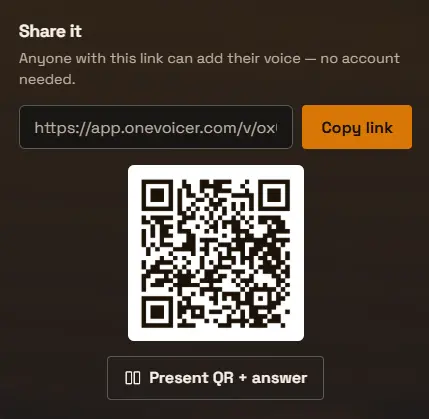
Once you have a question, the job is to make answering it nearly free. A QR code does that: no app to install, no account to make, no link to type. People scan with the camera already on their phone and answer in the browser in a few seconds. Put the code everywhere the eye lands: the counter, the banner, a table card, the badge lanyard insert, and the screen behind you.
The thing to protect is the two-second path from curiosity to answer. Every extra step, every sign-in wall, every redirect costs you participants and skews the ones you keep toward the few who were highly motivated anyway. On a crowded floor where you have a moment of attention at most, friction is the enemy.
# Put the question on a screen, and watch a crowd form
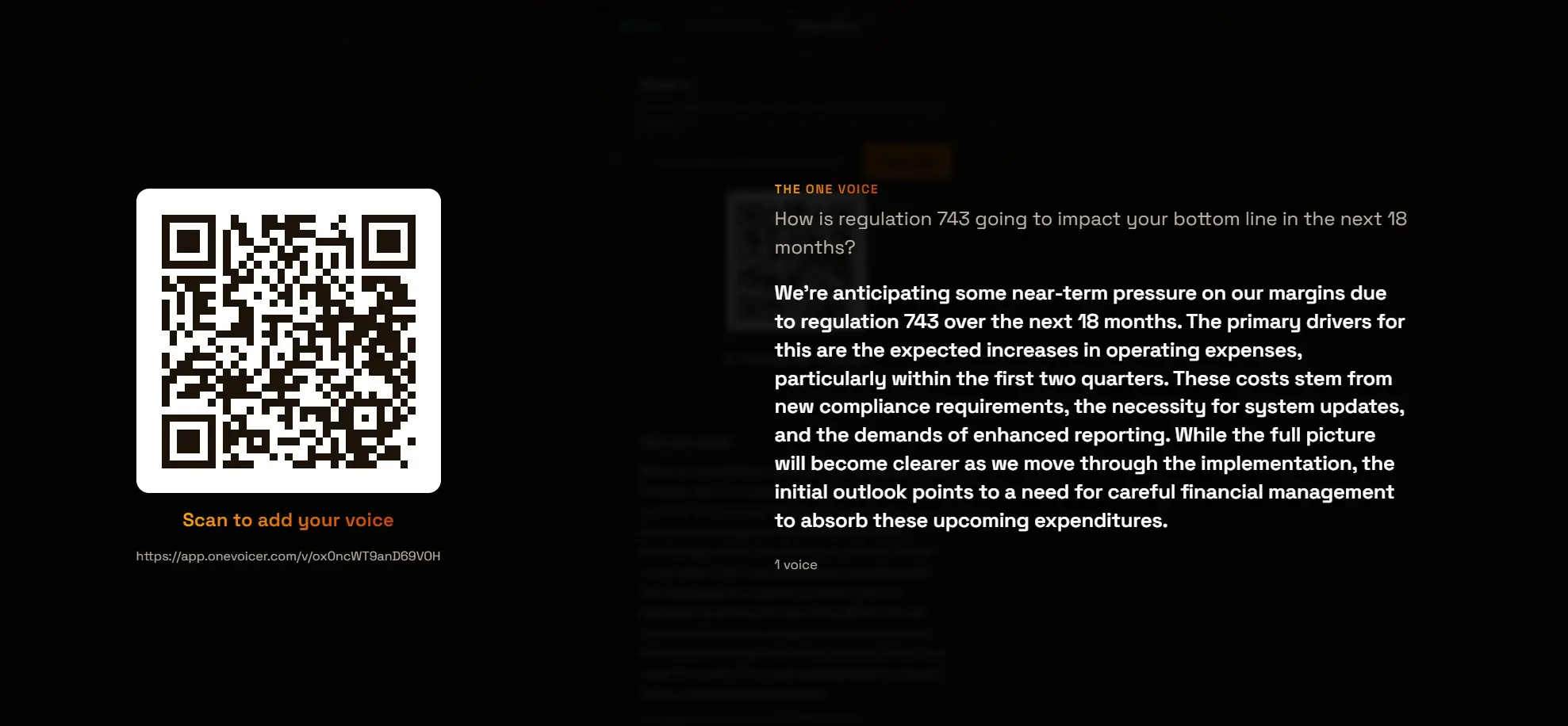
A QR code alone works. A screen makes it the peak moment. Put up a large display showing the question, a big QR code to scan, and the answer building live as people respond. A static banner is wallpaper; a screen that visibly changes as the floor weighs in is movement, and movement catches the eye from down the aisle.
It also borrows an old piece of human wiring: a crowd draws a crowd. People stop to see what other people have stopped for. A live, shared answer turns your booth from a place you have to be sold at into a thing that is happening, something a passerby can read and react to before they ever talk to a rep. That is the moment most booths never manage to create.
# The answer is your rep’s opener, and your takeaway
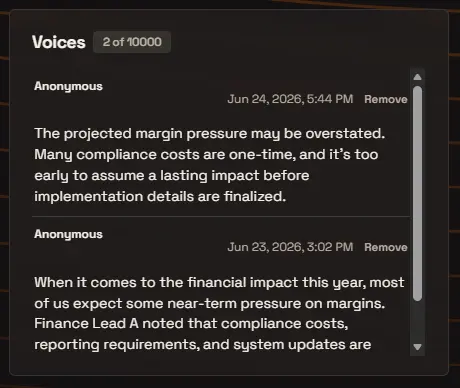
A live answer on the screen quietly fixes the hardest part of booth duty: the opening line. Instead of a rep lunging with “can I scan your badge,” they can nod at the screen and say, “we asked the floor what is most broken about this, here is what people are saying, what is your take?” That is a real conversation, started on the visitor’s terms, about a problem they care about. It is a far warmer doorway into talking about what you actually sell.
And you leave with more than a stack of badge scans. You leave with a read on what the entire floor thinks about your category, in their own words, captured automatically while your team was busy talking. That is genuine market intelligence and a set of warm conversations, which is a better return on an expensive booth than a list of names you are not sure ever stopped.
# Then follow up, fast
A moment on the floor is wasted if it dies on the floor. CEIR’s guidance on lead quality is blunt about this: the value of a lead diminishes quickly if it is not followed up. The energy of a good booth conversation has a short shelf life, and it fades on the flight home along with everyone else they met that day.
So plan the follow-up before the show, not after. Reach out within a day or two while the conversation is still fresh, and reference what they actually said at the booth rather than sending a generic thank-you. The conversation you had, not the badge you scanned, is the real lead. Treat it that way and the expensive square of carpet finally earns its keep.
# A booth plan for your next show
You do not need a six-figure build or a magician on payroll. You need one good question and an effortless way for people to answer it. Here is a simple way to run your next show.
- Pick one question Choose a single open question about your buyers’ world, opinionated and answerable in a sentence. Tie it to the problem you solve, not to your product, and commit to it for the whole show.
- Put the QR code everywhere Counter, banner, table card, lanyard insert, and the screen behind you. Make answering the path of least resistance, with no app and no sign-up between curiosity and reply.
- Run a live screen Show the question, the QR code, and the answer building live as people respond. A display that visibly changes is what catches the aisle and gathers a small crowd.
- Arm your reps with the answer Brief the team to open with what the floor is saying, not a pitch. The live answer is the conversation starter; their job is to ask the visitor for their take.
- Follow up while it is warm Within a day or two, reach out referencing what each person said at the booth. The conversation, not the badge scan, is the lead, so treat it like one before the energy fades.
# Frequently asked
How do I actually get people to stop at my booth?
Give them something to do and a reason that is about them, not you. A single open question they have an opinion on, answerable from their phone in seconds, stops more people than any banner. A live screen showing the answers build up turns that curiosity into a small crowd, and a crowd draws more people in.
Should booth responses be anonymous or require a sign-in?
Anonymous is usually right on a show floor. People answer more freely and faster, and you care about the shape of what the floor thinks, not an exact tally. Require a sign-in only when you genuinely need one clean answer per person, knowing every extra step costs you responses.
Do I need a screen, or is a QR code enough?
A QR code alone works. A screen makes it noticeably better, because a changing, shared display is what draws a crowd and creates the moment people remember. A tablet or the TV you already own is plenty; you do not need a custom build.
How many responses do I need before it is useful?
Fewer than you think. Even a few dozen honest answers surface clear themes and give your reps something real to open with. The goal is a live conversation starter and a read on the floor, not a statistical study.
What makes a good booth question?
One sentence, about the visitor’s world, with a real opinion behind it. Ask what is broken, what they wish existed, or what they would change first. Avoid yes/no questions and anything that is secretly a sales pitch, because those get the slow walk past.
# References
- Center for Exhibition Industry Research / Tourism Economics, U.S. B2B Exhibition Industry economic figures (2023) · $90B added to GDP and $161B in business sales
- Center for Exhibition Industry Research, “Profiles of Attendees and Exhibitors” · ~94% of attendees have net-buying influence (reported by Exhibit City News)
- Center for Exhibition Industry Research, “Attendee Preferences by Job Title” (via Trade Show Executive) · attendees rate learning and shopping above buying
- Freeman, “New Freeman Trends Report: Unpacking XLNC” (2025) · 61% define immersive experiences as hands-on; only 40% recall a peak moment vs 78% of organizers; peak-moment attendees 85% more likely to return
- EventTrack, Event Marketer (2021) · trying a product is the top driver of purchase intent
- EventTrack, “Event & Experiential Marketing Industry Forecast & Best Practices Study,” Event Marketer (2018) · 43% buy on-site and 30% within four weeks after trying a product
- Center for Exhibition Industry Research, “How Exhibitors Can Improve Lead Quality and Sales Conversion” (2019) · lead value diminishes quickly without follow-up